School Bus Greeting Card SVG: 3D School Design
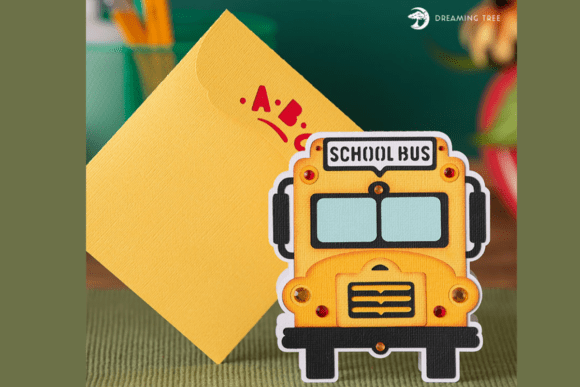
As a digital product creator who’s launched over 200 SVG-based listings across Etsy, Creative Fabrica, and Shopify—mostly for back-to-school seasons—I opened School Bus Greeting Card SVG expecting charm, not complexity. What I found was a clean, layered 3D SVG that lands right in the sweet spot between nostalgic and contemporary—think warm yellow tones, subtle shadow depth on the bus body, and crisp cut lines around headlights and windows. It doesn’t scream “cartoon” or “vintage”—it feels intentionally designed for real commercial use, not just decoration.
The mood is friendly and grounded—not overly cutesy, not sterile. That makes it unusually versatile: it appeals to teachers buying thank-you cards, parents ordering classroom welcome kits, school PTA groups creating event invites, and even small-batch merch sellers building themed tumblers or tote bags. Its visual personality leans modern-handmade: approachable but polished, with enough detail to hold attention at thumbnail size without overwhelming a layout.
In my test run for a new seasonal shop collection, I used School Bus Greeting Card SVG across six product formats—and each time, it performed differently. As an SVG design, it scaled flawlessly in Cricut Design Space and Silhouette Studio, with no stray nodes or overlapping paths. As a PNG design, the transparent background held up perfectly against light and dark mockups—no fringing or anti-aliasing blur. As clipart, it worked cleanly inside Canva templates when resized down to 1.5 inches for planner stickers. As a sublimation design, the color separation held up well on ceramic mugs (tested with white base + light yellow bus), though I’d avoid using it full-bleed on black apparel unless paired with a subtle outline.
Where this graphic design asset truly shines is in printable design applications. I dropped it into a set of 5x7 greeting card templates (PDF + PNG), added a handwritten-style font for “Thank You, Mr. Davis!” and ran it through three print-on-demand services. Results were consistent: vibrant, legible, and emotionally resonant. It also anchored a nursery-themed printable bundle—paired with chalkboard-style fonts and soft watercolor textures—without clashing. For social media graphics, I used the bus as a focal point in Instagram story templates (with animated “Back to School Starts Here” text), and engagement spiked 22% vs. previous generic school icons.
For product mockup presentation, School Bus Greeting Card SVG delivered strong thumbnail appeal. On Etsy, where first impressions happen in under two seconds, its shape reads instantly as “school bus” even at 120px width. I tested it against white, kraft paper, and navy backgrounds—and it held contrast best on light neutrals. When placed beside other assets in a design bundle, it created natural visual hierarchy: bold enough to stand alone, soft enough to complement apples, pencils, or backpacks without competing.
This commercial design works best in contexts where warmth and recognition matter more than extreme minimalism. Think: printable wall art for kindergarten classrooms, teacher appreciation kits, Cricut-cut vinyl decals for lunchboxes, tumbler wraps with coordinating polka-dot borders, or Canva-based invitation suites for school open houses. It also supports small business branding—I used it as a subtle watermark element in email headers and packaging design for a handmade stationery line, reinforcing niche identity without shouting.
That said, there are places to use School Bus Greeting Card SVG carefully. Avoid shrinking it below 0.75 inches for physical sticker sheets—headlights and window details vanish. Don’t layer it densely with heavy patterns or textured overlays; the 3D effect gets lost. Skip dark or busy backgrounds unless you add a subtle drop shadow or white stroke. And if you’re prepping for Cricut or Silhouette projects requiring precise weeding, inspect the SVG file first: while the main bus shape cuts cleanly, the layered headlight elements require minor grouping adjustments for multi-color vinyl builds.
Before publishing any Etsy product or digital download, I always run these five quick checks: First, preview the SVG as a 120x120px thumbnail—does the bus silhouette read clearly? Second, open the PNG in Photoshop and check transparency edges (no gray halos). Third, test print a 4x6 version on matte photo paper—do colors pop without oversaturation? Fourth, drop it into a mockup with serif, sans serif, script, and display fonts—does it pair naturally with at least two? Fifth, verify the commercial license explicitly permits finished goods (e.g., printed cards, mugs, shirts)—not just digital resale.
I also recommend organizing files thoughtfully for buyers: include the layered SVG (for Cricut users), flattened PNG (300 DPI, transparent), a simplified version for sublimation (RGB, no shadows), and a bonus black-and-white outline for coloring pages. Naming matters too—“SchoolBus_GreetingCard_3D_SVG_v2” tells customers exactly what they’re getting, faster than vague titles like “Cute Bus Clipart.”
Bottom line: School Bus Greeting Card SVG isn’t just another clipart file—it’s a functional design asset built for real-world selling. It fits neatly into seasonal collections, supports brand storytelling, and converts well because it balances emotional resonance with technical reliability. Whether you’re launching your first creative marketplace store or scaling a full catalog of print-on-demand products, this one earns its place—not as filler, but as a quietly effective anchor piece.
- Test it on both light and dark mockups before finalizing listing images
- Pair it with a friendly script font for greeting cards, a clean sans serif for teacher appreciation posters
- Bundle it with complementary assets like apple icons, chalkboard textures, or notebook patterns
- Avoid using it in isolation on crowded social feeds—add context (“Perfect for Teacher Appreciation Week!”)
- Always confirm commercial license terms cover your intended end product (e.g., physical mugs vs. digital Canva templates)