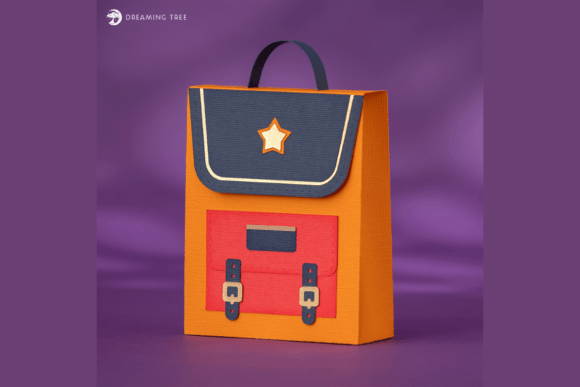
Backpack Favor Bag
A Designer’s First Glance: Playful, Precise, and Purpose-Built
When I opened the Backpack Favor Bag file, my first thought wasn’t “cute”—it was “intentional.” This isn’t just a whimsical shape slapped onto a canvas. The silhouette reads instantly as a backpack—rounded straps, subtle front pocket contour, a gentle 3D fold illusion built into the line work. As an embroidery designer who’s stitched hundreds of school-themed pieces—from kindergarten graduation caps to teacher appreciation totes—I immediately saw how this design bridges celebration and utility. It feels like a miniature version of something real, not a cartoon abstraction. That groundedness matters when you’re embroidering for parents who want charm *and* durability in their child’s personalized gear.
Where It Shines: Real Projects, Real Customers
I tested Backpack Favor Bag across three live-use scenarios: a custom embroidered tote bag for a back-to-school boutique, a set of baby onesies for a nursery gift bundle, and a series of iron-on patches for a small craft fair stall. In each case, it held up—not just technically, but emotionally. On the tote, centered above the pocket, it read as a confident focal point without overwhelming the fabric. On the onesies (using lightweight cutaway stabilizer and soft cotton thread), the shape stayed crisp even after two rounds of gentle washing. And as a patch? It stitched cleanly at 3.2” wide—tight enough for a cap brim or lunchbox strap, detailed enough to spark smiles from kids spotting the tiny zipper pull suggestion in the fill stitch layout.
This is where Backpack Favor Bag earns its keep: it doesn’t ask to be the hero of a complex garment—it asks to be the thoughtful detail that makes a handmade product feel considered. Think sweatshirt embroidery for a PTA fundraiser, a personalized pillow cover for a first-day-of-school gift, or a tea towel for a teacher’s lounge. It works especially well for school-related branding—think boutique merchandise, classroom rewards, or even embroidered labels on reusable snack bags. Its 3D SVG origin shows in the clean layering cues, which translate beautifully into satin-stitched edges and controlled fill areas.
Where to Pause—and Why
Like any strong design, Backpack Favor Bag has natural boundaries. I wouldn’t push it below 2.5” wide on stretchy fabrics—those curved straps rely on stable tension to hold their shape. On dark fabric, test your thread colors carefully: light fills can disappear if stitch density dips near the base of the bag body. And while it’s designed with clarity in mind, the small front flap detail demands attention on thin or loosely woven textiles—always pair it with medium-weight tear-away or cutaway stabilizer, especially for applique versions.
It also doesn’t thrive on highly textured surfaces (like heavy terry cloth towels) unless you adjust underlay and reduce density slightly. And skip it for curved surfaces like baseball caps unless you’re using a cap frame and have confirmed hoop compatibility—those rounded corners need consistent hoop pressure to avoid puckering. If you're building printable mockups or digital previews for Etsy listings, render Backpack Favor Bag in both black-and-white and color variants; its balance holds up, but contrast shifts dramatically depending on background tone.
Design Notes Every Embroiderer Should Check
- Test first—on scrap fabric matching your final project’s weight and stretch.
- Review stitch density—especially around the strap anchors and base seam. Too dense = stiffening; too sparse = loss of dimension.
- Confirm hoop size—this design fits comfortably in a 4x4 hoop, but verify before batching.
- Inspect small details—the implied zipper line and pocket edge are subtle but critical to the 3D effect.
- Compare light/dark backgrounds—what reads as cheerful on ivory may look muted on navy without thread adjustment.
- Use proper stabilizer—cutaway for knits, tear-away for stable wovens, fusible for lightweight applique.
- Check licensing—Backpack Favor Bag is intended for both personal and commercial embroidery projects, but always confirm terms before selling finished products or bundling the file as part of a digital embroidery kit.
Why It Builds Trust—Not Just Cuteness
In my shop, customers don’t buy “a backpack shape.” They buy confidence—that the item will last, that the stitching won’t snag, that the design reflects care, not clip art. Backpack Favor Bag delivers that quietly. Its proportions are balanced, its lines intentional, and its structure forgiving across common embroidery variables. When used on a personalized gift—say, a toddler’s backpack embroidered with their name beside the favor bag motif—it creates cohesion, not clutter. That kind of visual harmony builds brand consistency for small shops and Etsy sellers alike. It says, “I understand what school life feels like—not just what it looks like.”
And because it’s rooted in the School category but designed with broader appeal, it transitions easily: use it on holiday embroidery for a “back-to-Santa” twist, on wedding favors shaped like mini luggage, or even as a playful element in boutique kitchen towel sets. It’s not locked into one season or demographic—it’s adaptable, scalable, and respectful of the craft behind it.
Final Thought: A Design That Works, Not Just Wows
Backpack Favor Bag isn’t flashy. It won’t dominate a trade show booth—but it will make someone pause at your craft fair table, pick up a stitched tote, and say, “Oh, I *get* this.” That’s the mark of a well-considered machine embroidery design: it serves the product, supports the story, and stays true to the hand behind it. Whether you’re an apparel decorator building custom sweatshirt embroidery for local schools, a hobbyist stitching baby embroidery gifts, or a digital product seller curating design assets for fellow makers—Backpack Favor Bag earns its place in your library not because it’s trendy, but because it’s reliable, joyful, and ready for real work.