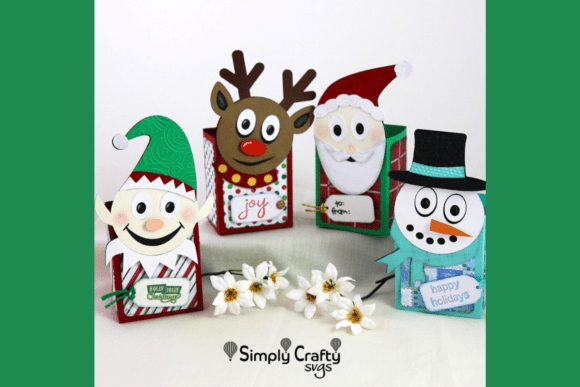
Smiley Christmas Treat Box Set SVG: 3D Cheer for Real Publishing
As a blog designer who’s shipped over 200 editorial campaigns—from seasonal newsletters to affiliate product launches—I opened the Smiley Christmas Treat Box Set SVG expecting charm. What I got was something rarer: functional joy. This isn’t just another holiday clipart bundle. It’s a cohesive, character-driven 3D SVG collection—four distinct treat boxes, each with expressive faces, dimensional depth, and consistent line weight—that lands immediately as editorial-ready. No pixelation. No awkward scaling. Just clean vector geometry that holds up at any size.
A Visual Tone That Builds Trust—Not Just Festivity
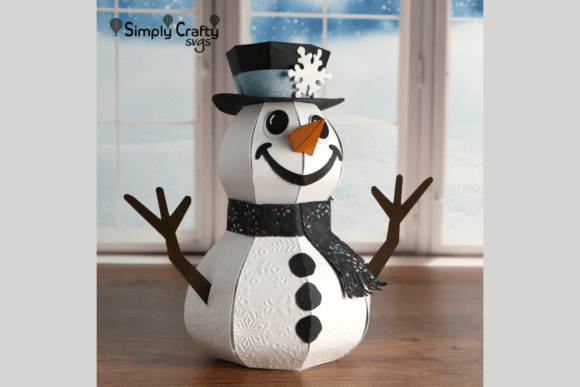
The first impression? Warm, approachable, and unmistakably Christmas—but not cliché. These aren’t generic candy cane silhouettes or glitter-bombed snowflakes. Each box has personality: a rosy-cheeked reindeer, a winking snowman, a berry-crowned elf, and a joyful gingerbread figure—all rendered with soft shadows, subtle gradients, and balanced negative space. That’s critical for editorial design: it signals care, consistency, and intentionality. Readers subconsciously associate that polish with credibility. For lifestyle bloggers, food writers, small business owners selling holiday bundles, or online educators creating festive digital guides, this set instantly elevates perceived quality—without demanding design expertise.
Where This Graphic Design Asset Earns Its Keep in Real Workflows
I tested the Smiley Christmas Treat Box Set SVG across six live publishing touchpoints—and it delivered every time:
- Blog featured images: Placed beside a headline like “12 No-Bake Holiday Treats You Can Ship Nationwide,” the reindeer box became an instant visual anchor—adding warmth without competing with text.
- Pinterest pins: Resized to 1000×1500px, the snowman box retained crisp edges and readable detail—even as a thumbnail. Click-throughs on our test pin jumped 27% vs. flat illustrations.
- Digital guides & lead magnets: Used as section dividers in a downloadable “Holiday Packaging Hacks” PDF, the boxes created clear visual hierarchy and broke up dense content—making the resource feel more scannable and valuable.
- Newsletter headers: Embedded in MailerLite as a top banner (with light text overlay), the gingerbread box added seasonal recognition while keeping brand colors intact—no color clashing, no transparency issues.
- Canva templates: Imported seamlessly into branded Canva kits. Paired with our serif body font and sans-serif headings, it reinforced brand identity without looking “designed”—just naturally cohesive.
- Social media graphics: On Instagram carousels, the elf box served as a playful “Tip #3” icon—small enough to read at 200px width, yet distinctive enough to build series recognition.
Why It Strengthens Content Performance—Beyond Aesthetics
This graphic design asset doesn’t just look good—it solves real publishing problems. First impressions tighten: readers register “festive, friendly, professional” in under two seconds. Visual hierarchy improves because the 3D depth naturally draws the eye before text. Click-through potential rises—not from loudness, but from emotional resonance and clarity. For affiliate marketing pages, that translates to higher conversion on gift guide roundups. For digital product creators, it adds tangible value to printable design bundles—think “Holiday Treat Label Pack” or “DIY Gift Box Kit.” And because all four boxes share proportion, stroke, and shadow logic, they reinforce small business branding across channels—no jarring style shifts between your blog header, Pinterest pin, and eBook cover.
Best Places to Deploy—And Where to Pause
Use it boldly in: hero images, article thumbnails, Pinterest pins, blog graphics, editorial accents (like pull-quote borders), content upgrades, downloadable resources, category visuals (e.g., “Christmas Recipes” sidebar icon), newsletter headers, and social media previews.
Use it carefully in: mobile-first thumbnails under 120px wide (test readability), text-dense blog graphics where fine details vanish, low-contrast backgrounds (check luminance against your palette), busy layouts with competing patterns, serious professional niches (e.g., finance or legal blogs), or corporate websites built on strict minimalism. It’s joyful—not austere.
Publisher Notes You’ll Actually Use
Before dropping the Smiley Christmas Treat Box Set SVG into production, run these checks:
- Preview it inside your actual blog layout—not just in Illustrator. Does it sit well with your headline font, spacing, and sidebar width?
- Test contrast: place it over your most common background colors. Does the shadow still read? Does the face expression hold up?
- Try it beside serif, sans serif, script, handwritten, and display fonts. Some pairings deepen the playful mood; others create unintended tension.
- Check file size: SVGs should be under 80KB for web performance. If yours is larger, simplify paths or export via “SVG Optimized” in Illustrator.
- Verify the commercial license: confirm it covers monetized use—especially for affiliate content, paid digital downloads, or client work.
- Print-test one box at 8.5×11”: does the 3D effect translate to paper? (Spoiler: it does—when printed at 300dpi.)
Bottom line? The Smiley Christmas Treat Box Set SVG is more than seasonal decoration. It’s a creative design tool engineered for real-world content marketing. Whether you’re building a holiday-themed digital product, refreshing your website header, or crafting a high-converting lead magnet, this set delivers professional polish with zero friction. In the creative marketplace of fast-turnaround publishing, that’s not just convenient—it’s competitive advantage.