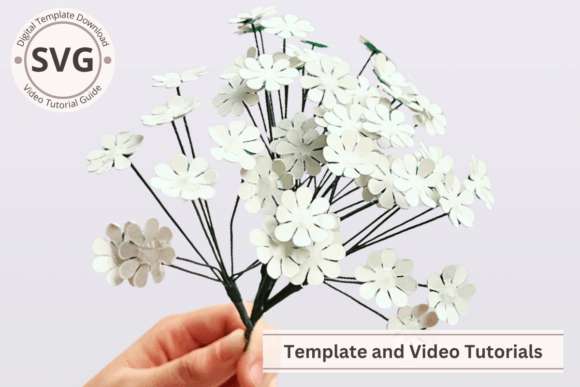
Paper Gypsophila Baby’s Breath Template
A Delicate, Thoughtful Accent—Not a Standalone Statement
As someone who’s stitched hundreds of custom pieces—from baby onesies for boutique clients to embroidered aprons for local cafés—I opened the Paper Gypsophila Baby’s Breath Template expecting lightness, airiness, and quiet intention. What I found wasn’t just a floral filler; it’s a mood-setter. The design reads as soft, organic, and intentionally uncluttered—each tiny bloom placed with breathing room, not density. It doesn’t shout. It whispers “tender,” “thoughtful,” “handmade with care.” That makes it especially compelling for projects where emotional resonance matters more than visual impact: newborn announcement towels, wedding guest book covers, linen pillowcases for nurseries, or minimalist tote bags for eco-conscious small shops.
Where It Shines in Real Embroidery Projects
I tested the Paper Gypsophila Baby’s Breath Template as a border element on a lightweight cotton tea towel—and immediately saw why it works so well for small business makers. Stitched in pale ecru thread on natural linen, it read clearly without overwhelming the fabric. On a medium-weight sweatshirt, used as a subtle shoulder accent (not centered), it added texture without bulk. As part of a custom embroidered patch for a children’s boutique, it framed a monogram beautifully—softening the formality while keeping legibility intact. For Etsy sellers offering personalized baby embroidery, this template fits naturally alongside initials, birth dates, or tiny animal motifs. It’s also effective in holiday embroidery: think delicate sprigs tucked into corners of Christmas kitchen towels or stitched along the hem of a handmade stocking.
Why It Fits Boutique Branding—Not Mass Production
This isn’t a high-contrast, bold machine embroidery design built for quick recognition at a craft fair booth. It’s quieter. That’s its strength—and its limitation. When used intentionally—as part of a cohesive design system—it elevates perceived value. Customers notice the restraint. They feel the care in placement and scale. A small shop owner told me she used it on a set of matching napkins and coasters; buyers specifically mentioned how “calm” and “intentional” the stitching felt. That kind of emotional response translates directly to repeat customers and word-of-mouth trust. But it won’t carry a product alone. Pair it with clean typography, thoughtful spacing, or a single anchor motif—not busy patterns or dense fill stitches.
Where to Proceed With Care
The delicacy that gives the Paper Gypsophila Baby’s Breath Template its charm also demands attention in execution. On stretchy fabrics like knits or thin t-shirts, fine stems and tiny blooms can distort if stabilizer isn’t matched precisely to fabric weight and stitch density. I recommend testing on scrap first—especially if you’re planning sweatshirt embroidery or baby embroidery where fabric drape and comfort are non-negotiable. On dark fabric, avoid light thread unless you’re using a high-quality, low-lint polyester; subtle details vanish quickly in low contrast. Curved surfaces—like caps or curved pillow covers—require careful hooping and possibly repositioning to keep stems from bending unnaturally. And on textured fabrics (burlap, heavy linen, or nubby cotton blends), those fine running stitch outlines may blur unless stitch length is adjusted slightly longer than default.
Stitching Notes Every Designer Should Check
- Test before committing: Run the Paper Gypsophila Baby’s Breath Template on scrap fabric matching your final project’s weight, weave, and stretch.
- Review stitch density: If your version includes fill areas (even small ones), check whether they’ll lay flat on lightweight or layered garments.
- Confirm hoop size compatibility: Some iterations of this 3D SVG-based template expand wider than standard 4x4 hoops—measure before digitizing or importing.
- Inspect small details: Tiny buds or thin connecting lines may need slight manual cleanup in your embroidery software for optimal clarity.
- Mock up in black and white: This helps assess readability across fabric tones—especially important for commercial embroidery clients ordering in bulk.
- Use appropriate stabilizer: Tear-away works for stable wovens; cut-away adds security for knits or frequent-wash items like baby clothes or kitchen towels.
- Verify licensing: Since this is marketed as a digital embroidery file for DIY papercraft and embroidery use, confirm whether your intended application—selling finished embroidered patches or digital design assets—falls within permitted use.
More Than Just a Fill-In—It’s a Design Decision
What stands out most about the Paper Gypsophila Baby’s Breath Template is how it invites intentionality. It doesn’t beg to be scaled up or repeated across a full tote bag front. Instead, it asks: Where does quiet beauty serve the story of this product? That makes it ideal for creative entrepreneurs building recognizable, values-driven brands—think handmade product lines focused on sustainability, mindfulness, or gentle aesthetics. For an apparel decorator adding embroidery to a limited-run capsule collection, it signals craftsmanship over speed. For an Etsy seller listing printable mockups or digital embroidery files, it pairs well with neutral color palettes and minimalist layout guides.
In short: this isn’t filler you toss in to “finish” a design. It’s a considered accent—one that earns its place through subtlety, cohesion, and emotional resonance. Used well, it deepens customer connection. Used hastily, it fades into background noise. So take the time. Test it. Adjust it. Let it breathe—just like the gypsophila itself.